Showing posts with label Graffiti. Show all posts
Saturday, February 25, 2017
Sunday, January 15, 2017
Wednesday, January 4, 2017
Saturday, December 3, 2016
Exile
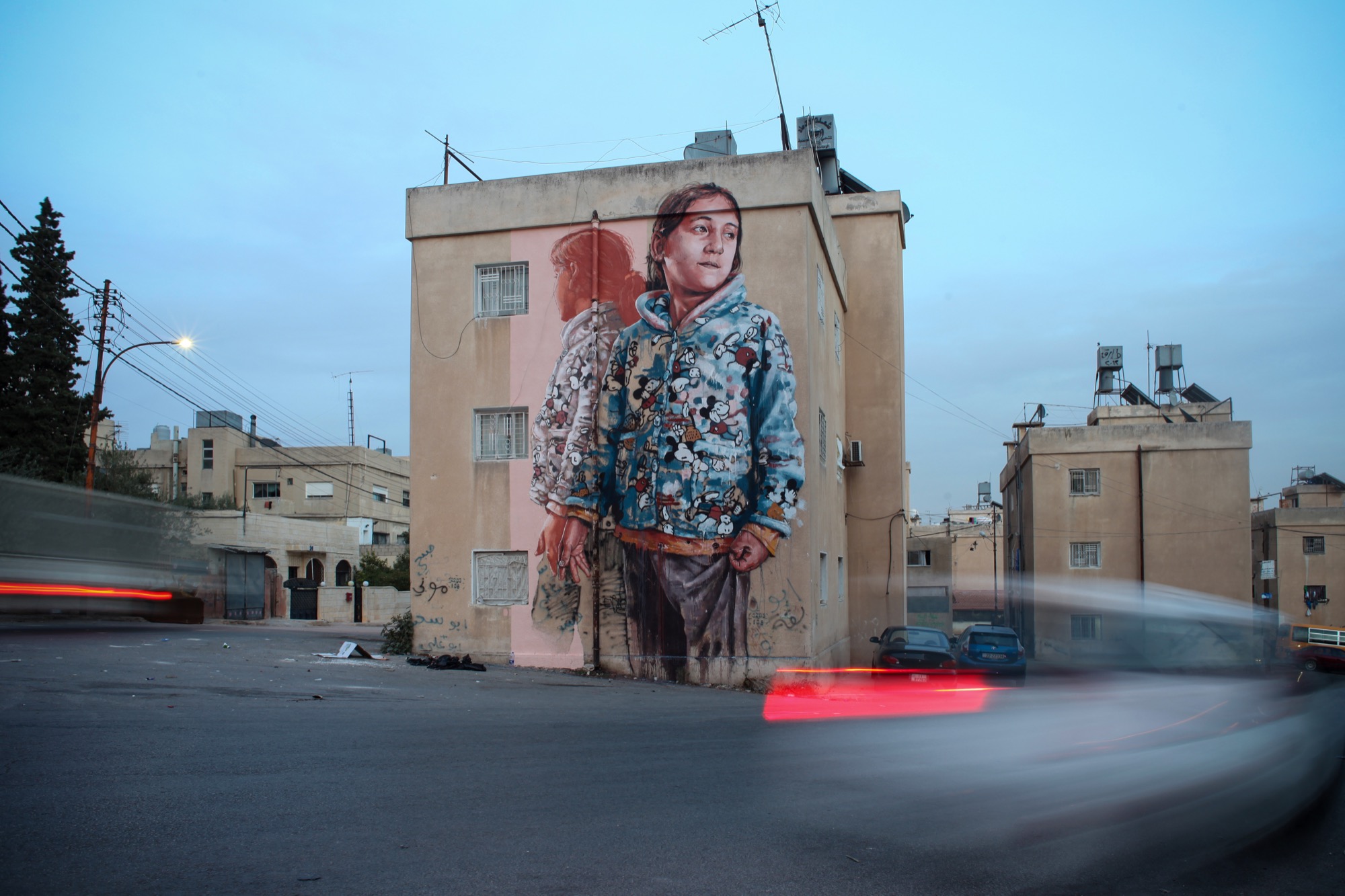
"Inside Azraq Refugee camp there is a space for children who arrive without their parents. All the stories are different. Some children lost their parents in the war, others lost them in transit across the border and some have parents than can not or no longer wish to care for them. The kids stay in a specific space that is an orphanage of sorts. They are not permitted to leave this space until they are either 18 or they are reunified with their parents. The space is in the desert camp with stark white pre-fabricated containers. Together with Fintan Magee, Jordanian artist Suhaib Attar and the kids, they painted their space. AptArt covered every bit of white space with colour."
read the rest here
Thursday, August 25, 2016
Thursday, August 11, 2016
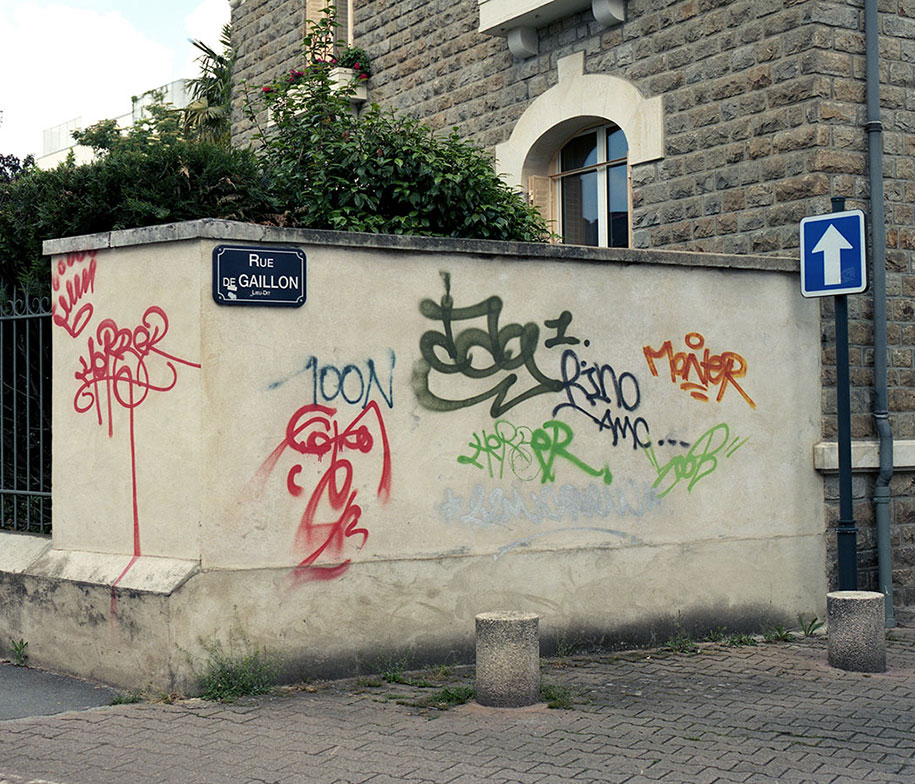
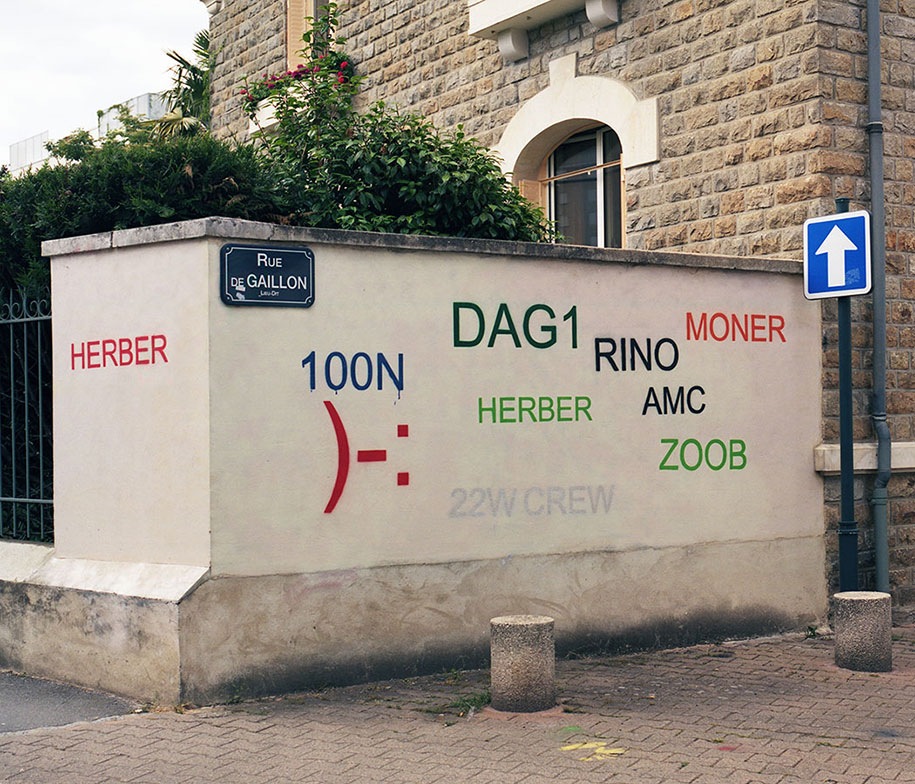
"Tag Clouds"
“Tag Clouds principle is to replace the all-over of graffiti calligraphy by readable translations like the clouds of keywords which can be found on the Internet,” Tremblin describes his project. “It shows the analogy between a physical tag and virtual tag, both in the form (tagged walls compositions look the same as tag clouds), and in substance (like keywords which are markers of net surfing, graffiti are markers of urban drifting)."
http://www.demilked.com/painting-over-graffiti-removing-tags-street-art-mathieu-tremblin/
Monday, August 8, 2016
Lushsux covers Bikini Clinton in Burqa
Melbourne graffiti artist sprays burqa over provocative Hillary Clinton muralhttps://t.co/p1uH0cBNTc pic.twitter.com/tXSddz8nld— CNN Wire (@CNNWire) August 2, 2016
http://edition.cnn.com/2016/08/02/asia/australia-clinton-mural-artist-burqa/index.html
Thursday, July 21, 2016
Medieval Graffiti
"Many of the markings discovered in medieval churches are all but identical. A survey of a church in northern England will reveal the same graffiti motifs and markings as those found in a church on the English South Coast. Even more remarkably, the same medieval markings recorded in most English churches are in churches across the whole of western Europe. Essentially, everywhere the medieval Christian church thrived, medieval Europeans inscribed their places of worship with the same graffiti marks. Known as ‘ritual protection marks’, medieval people believed that these symbols warded off evil influences. Today they are more commonly called ‘witch marks’.
...
Why are there no angels? The reason is quite simple. The graffiti on the walls shows only what those who made it thought was real and immediate. Angels were heavenly beings. They littered the pages of the Bible, but could not be expected to play a part in the lives of the people in the world. Demons, on the other hand, were very real indeed. It was demons who were responsible for any sudden illness or unexplained death. Demons brought down a blight upon the harvest crops. Demons unbalanced the mind of the simpleton, and brought on the terrifying storms that could lay waste a whole year’s crop in a single afternoon. Demons were real and to be feared. This fear drove medieval people to carve their counter-curses into the walls of the parish church."
read full article here
Graffiti and Political Possibility in Athens, Greece
By: Othon Alexandrakis
Abstract:
Based on field research in Athens, Greece, this essay considers graffiti as a mode of political response to the material and symbolic violences of neoliberal governmentality. In 2010, the Greek state declared sovereign debt crisis and began to implement an aggressive austerity program in exchange for economic aid from a troika of international lenders. This resulted in the dismantling of public services, tax increases, salary and pension reductions, layoffs, and, generally, the impoverishment of the middle and lower classes. In this work I consider a crew of three young graffiti writers, both before and during the years of the crisis, as they came to realize a fear of becoming integrated into an economized social mainstream and responded by creating street art intended to bolster critical reasoning among Athenians. I argue that fear of abjection and the experience of being at the social margins served as a stimulus of critical agency, and that the crew’s intervention can be considered indirect activism: a mode of resistance whose critical agents attempt to bring about their ambitions and visions by activating other groups to undertake resistance of their own. I show how my interlocutors made political possibility by creating art that lessened the capacity of neoliberal governmentality to manufacture consent, thereby contributing to a thriving ecology of resistance action in Athens.
Read full article here
Abstract:
Based on field research in Athens, Greece, this essay considers graffiti as a mode of political response to the material and symbolic violences of neoliberal governmentality. In 2010, the Greek state declared sovereign debt crisis and began to implement an aggressive austerity program in exchange for economic aid from a troika of international lenders. This resulted in the dismantling of public services, tax increases, salary and pension reductions, layoffs, and, generally, the impoverishment of the middle and lower classes. In this work I consider a crew of three young graffiti writers, both before and during the years of the crisis, as they came to realize a fear of becoming integrated into an economized social mainstream and responded by creating street art intended to bolster critical reasoning among Athenians. I argue that fear of abjection and the experience of being at the social margins served as a stimulus of critical agency, and that the crew’s intervention can be considered indirect activism: a mode of resistance whose critical agents attempt to bring about their ambitions and visions by activating other groups to undertake resistance of their own. I show how my interlocutors made political possibility by creating art that lessened the capacity of neoliberal governmentality to manufacture consent, thereby contributing to a thriving ecology of resistance action in Athens.
Read full article here
Monday, July 18, 2016
Wednesday, July 13, 2016
Street Art; Christchurch, New Zealand
Tuesday, July 12, 2016
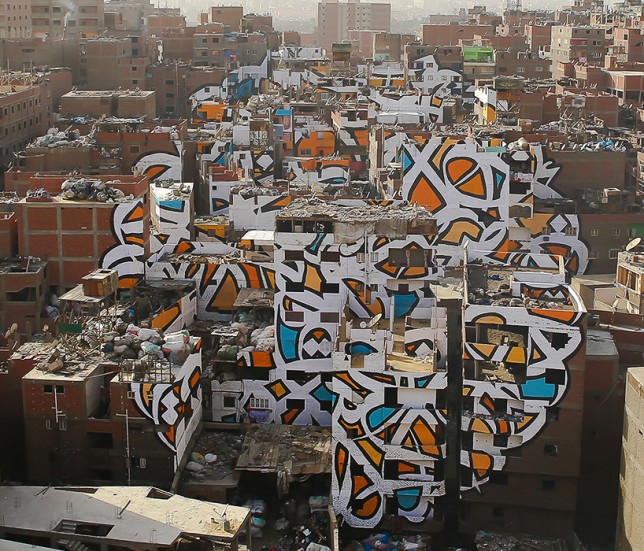
Calligraffiti: “anyone who wants to see the sunlight clearly needs to wipe his eye first.”
"On the outskirts of Cairo, Egypt, lies the community of Manshiyat Naser, famous for providing informal trash and recycling services for the city, but also notorious for the mess and smell that go with that role."
"The mural blends aspects of Arabic calligraphy with contemporary graffiti, all while highlighting the architecture of the area. The entire work is only visible from the nearby Mokattam Mountain."
read rest here
Sunday, June 5, 2016
Old Hobo Graffiti
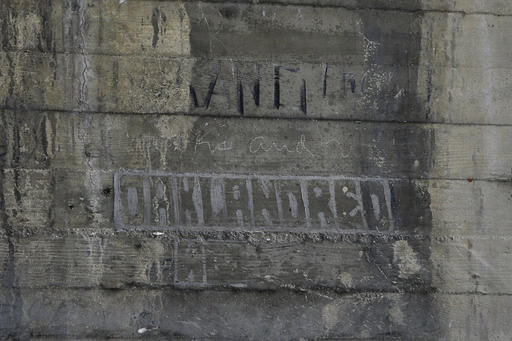
"Anthropologist Susan Phillips had spent a career examining the graffiti that covers urban walls, bridges and freeway overpasses.
Phillips had uncovered a peculiar, almost extinct form of American hieroglyphics known as hobo graffiti, the treasure trove discovered under a nondescript, 103-year-old bridge spanning the Los Angeles River. At the time, she was researching her book, "Wallbangin': Graffiti and Gangs in LA."
"It was like opening a tomb that's been closed for 80 years," the Pitzer College professor of environmental analysis said of finding the writings and occasionally the drawings of people who once signed their names as Oakland Red, the Tucson Kid and A-No. 1.
"There's an A-No. 1, dated 8/13/14," she said, pointing to a scribbling during a recent visit to the bridge just around the bend from a modern-day homeless encampment.
Although all but forgotten now, A-No. 1 was the moniker used by a man once arguably America's most famous hobo, one of the many itinerant wanderers who traveled from town to town in the 19th and 20th centuries, often by freight train, in search of brief work and lasting adventure.
Read rest here
Phillips had uncovered a peculiar, almost extinct form of American hieroglyphics known as hobo graffiti, the treasure trove discovered under a nondescript, 103-year-old bridge spanning the Los Angeles River. At the time, she was researching her book, "Wallbangin': Graffiti and Gangs in LA."
"It was like opening a tomb that's been closed for 80 years," the Pitzer College professor of environmental analysis said of finding the writings and occasionally the drawings of people who once signed their names as Oakland Red, the Tucson Kid and A-No. 1.
"There's an A-No. 1, dated 8/13/14," she said, pointing to a scribbling during a recent visit to the bridge just around the bend from a modern-day homeless encampment.
Although all but forgotten now, A-No. 1 was the moniker used by a man once arguably America's most famous hobo, one of the many itinerant wanderers who traveled from town to town in the 19th and 20th centuries, often by freight train, in search of brief work and lasting adventure.
Read rest here
Friday, March 18, 2016
Art in the Streets
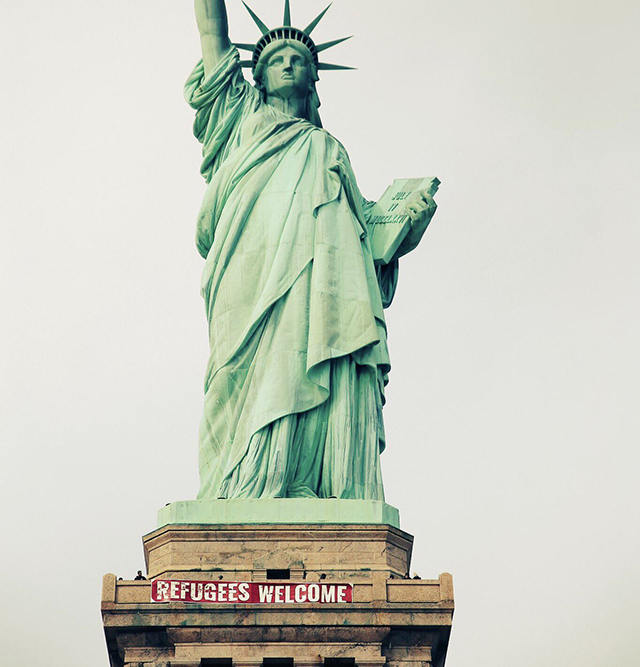
"Street artists engage in activism in a unique way: by moving their art out of the museum and into ordinary life, street artists do not merely comment about the state of the world; they intervene and change our world with their works. Inserting art directly into the real world (not the artworld) allows street artists to actively construct a different world to inhabit. Street art is designed to cross the boundary between art and an actual act of protest – that is its point!
This activism is made possible because of its aconsensual methods of production. No matter what style, medium, or political agenda, all street art is made without consent of the property owner. This aconsensuality transforms the art-making process into an act of
political and social protest. It is the umbrella concept under which the diverse facets of street art come together into a single, unified group that does justice to the social, political, intersectional, environmental and legal aspects of street art.
Street art is a sign of the times – where consumerism has become a forced way of life, where the artworld’s institutional pressures suffocate emerging artists, and where marginalised artists struggle to make their voice heard, street art represents an unexpected opportunity to opt out of the artworld system altogether. But these artists are not going underground; they are taking to the streets! There, they have the freedom to create their own art, in their own style, on their own terms. Street art presents a new alternative path for artists – one that allows them a chance for authentic expression, an opportunity to develop a set of alternative customs, traditions and norms that operate alongside, but definitely far away from, the “official” code articulated in art schools. The street is a logical escape from it all."
read more here
by Dr. Sondra Bacharach, Victoria University of Wellingtom
This activism is made possible because of its aconsensual methods of production. No matter what style, medium, or political agenda, all street art is made without consent of the property owner. This aconsensuality transforms the art-making process into an act of
political and social protest. It is the umbrella concept under which the diverse facets of street art come together into a single, unified group that does justice to the social, political, intersectional, environmental and legal aspects of street art.
Street art is a sign of the times – where consumerism has become a forced way of life, where the artworld’s institutional pressures suffocate emerging artists, and where marginalised artists struggle to make their voice heard, street art represents an unexpected opportunity to opt out of the artworld system altogether. But these artists are not going underground; they are taking to the streets! There, they have the freedom to create their own art, in their own style, on their own terms. Street art presents a new alternative path for artists – one that allows them a chance for authentic expression, an opportunity to develop a set of alternative customs, traditions and norms that operate alongside, but definitely far away from, the “official” code articulated in art schools. The street is a logical escape from it all."
read more here
by Dr. Sondra Bacharach, Victoria University of Wellingtom
Wednesday, December 23, 2015
Sunday, December 13, 2015
Saturday, December 12, 2015
Subscribe to:
Posts (Atom)